
What history teaches us about market downturns and how financial planning can help.
Stock market corrections are normal, but that doesn’t mean they feel comfortable. In 2026, after three calendar years of strong market returns, a swift pullback in stocks likely has you asking questions. “Should I sell? Buy more? Change my investing strategy?” It’s easier for me as a financial planner to tell you to stay the course, but that might feel like lip service or hopeful thinking. Instead, I would like to take you through our thoughts at Pearl Planning about market corrections and best practices with a list of questions and answers.
Here are ten questions we believe every investor should consider when facing a correction.
Section 1: Understanding Stock Market Corrections
Question 1: What is a correction?
A stock market correction is considered to be a drawdown of stocks between 10 and 20%. In modern times, corrections are often measured based on the S&P 500 or large company US stocks. Drawdowns beyond 20% are considered to be bear markets. A stock market crash is often considered to be a drawdown in excess of 20% in a quick time period.
Question 2: How often does a stock market correction occur?
Corrections are a common occurrence for long-term investors and a normal part of investing. That doesn’t mean that they feel comfortable. On average, corrections occur every 1-2 years with drawdowns of 10% about every 18 months and drawdowns of 15% once every three years. Source: Capital Group. It is a part of the package for stock investors to have volatility and both drawdowns and bouncebacks, often in the same periods. A look at recent history from 1980 to 2025 shows that while the average return in the S&P 500 has been 13.3% per year, the average rally per year was 27.2% and the average drop was -14%. It might be difficult to recall this level of frequency, but this history can be a helpful reminder.
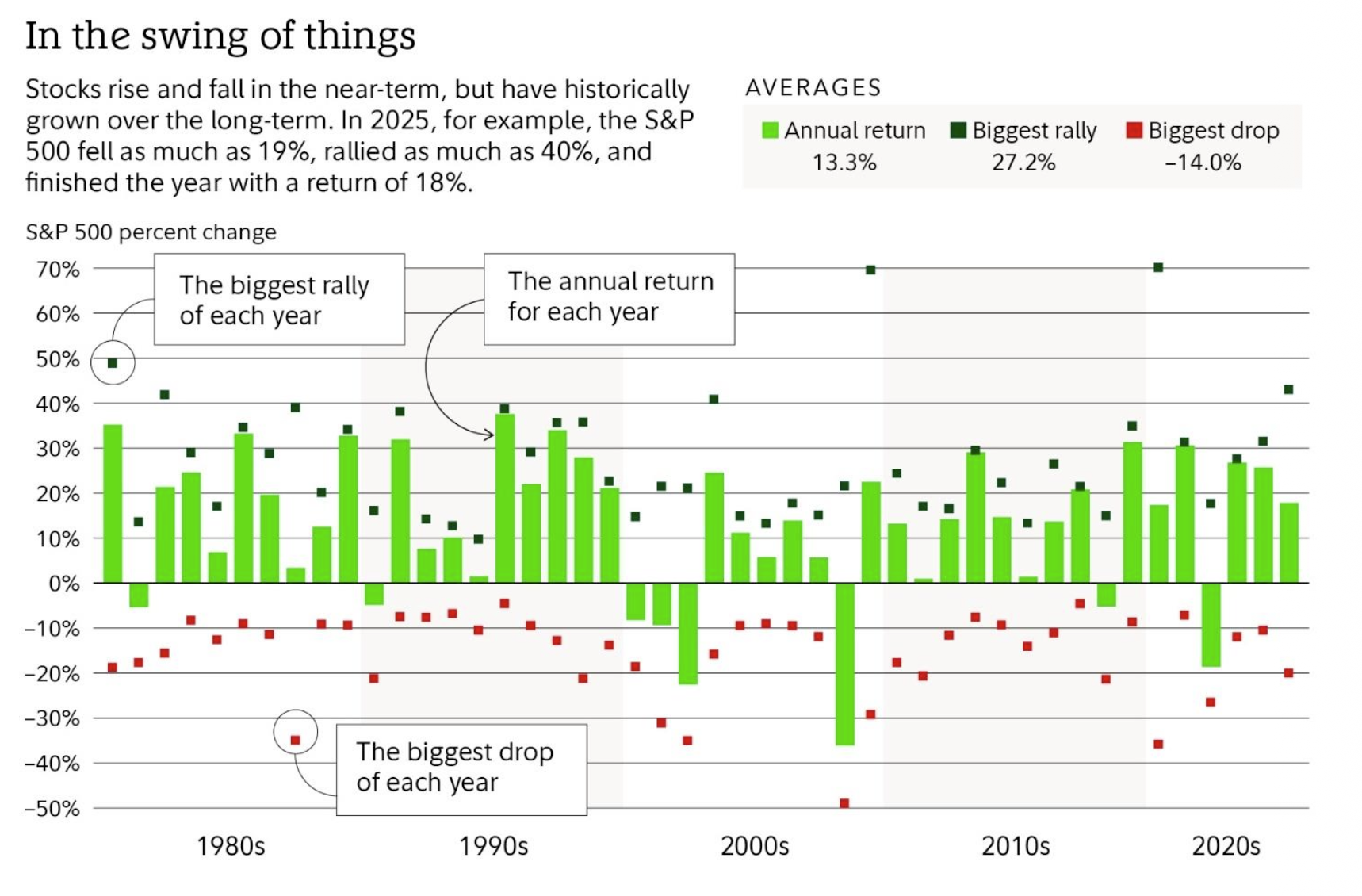
Source: Fidelity. Past performance is no guarantee of future results. Returns are based on index price appreciation and dividends. Indexes are unmanaged. It is not possible to invest directly in an index. Biggest drop refers to the largest index drop from a peak to a trough during each calendar year. Biggest rally refers to the largest index gain from a trough to a peak during each calendar year. Data as of December 31, 2025. Sources: Standard & Poor’s, Bloomberg Finance L.P., Fidelity Investments.
Question 3: Why is this correction occurring?
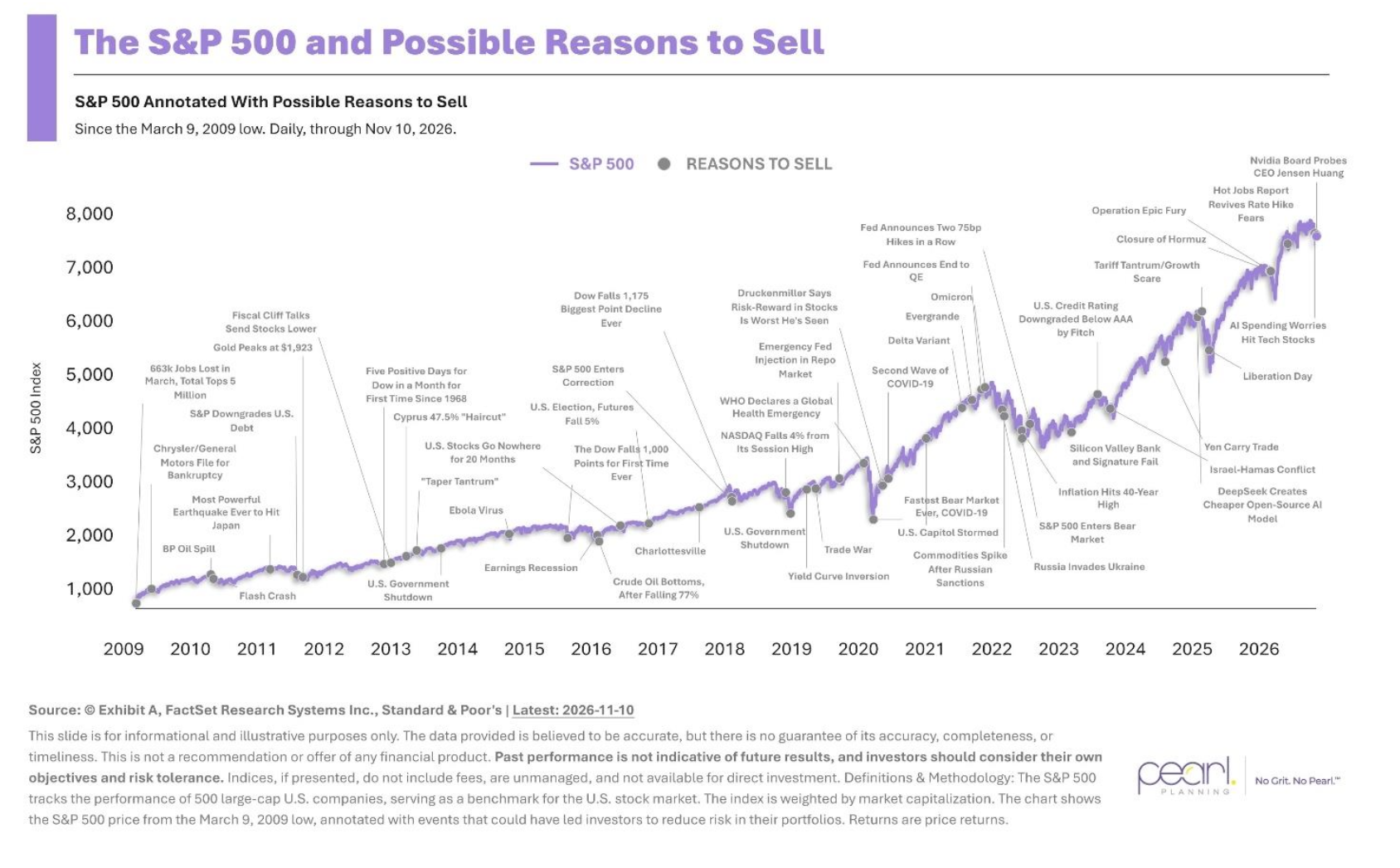
In a word, today’s markets are complicated. In November, the combination of a sustained rally looking for possible relief (pause), changes in the Washington power structure after November elections, AI skepticism and pushback, and a scandal at Nvidia, one of the country’s largest stocks, combined for a sharp decline in US stocks, especially technology stocks are considered possible causes for this current pullback. Other factors include ongoing conflicts in Ukraine and Iran, inflation in the US, and a housing market in the doldrums. And, in reality, all market downturns are up for debate when it comes to cause and causation. There’s a lot to be concerned about. There always is. A look back at stock market returns and headlines leaves a dizzying list of reasons to sell. See our list below. As my years of experience in investing added up, I’ve professionally experienced each of these moments. They don’t feel easy, but with hindsight, persisting with investing has been rewarding.
Question 4: How long does a stock market correction typically last?
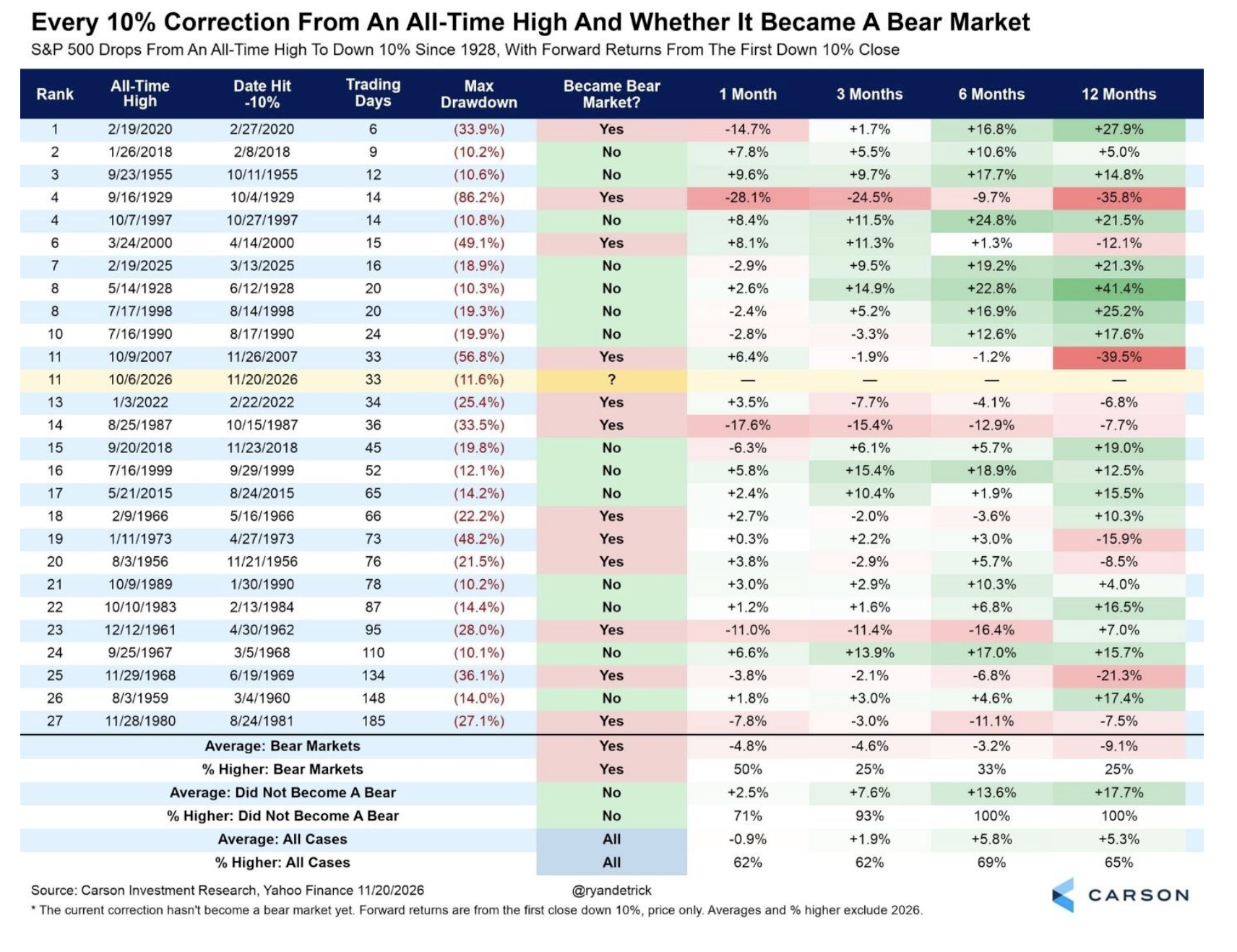
Yardeni Research says the average correction is 113 days [Source: Fidelity], but their length can vary widely. This particular correction in 2026 is coming off of all time highs which has occurred 27 times since 1929. When this has occurred in the past, stocks are higher after 1, 3, 6, and 12 months about 2/3 of the time across the board. See Ryan Detrick’s research below.
Question 5: Are market corrections accompanied by recessions?
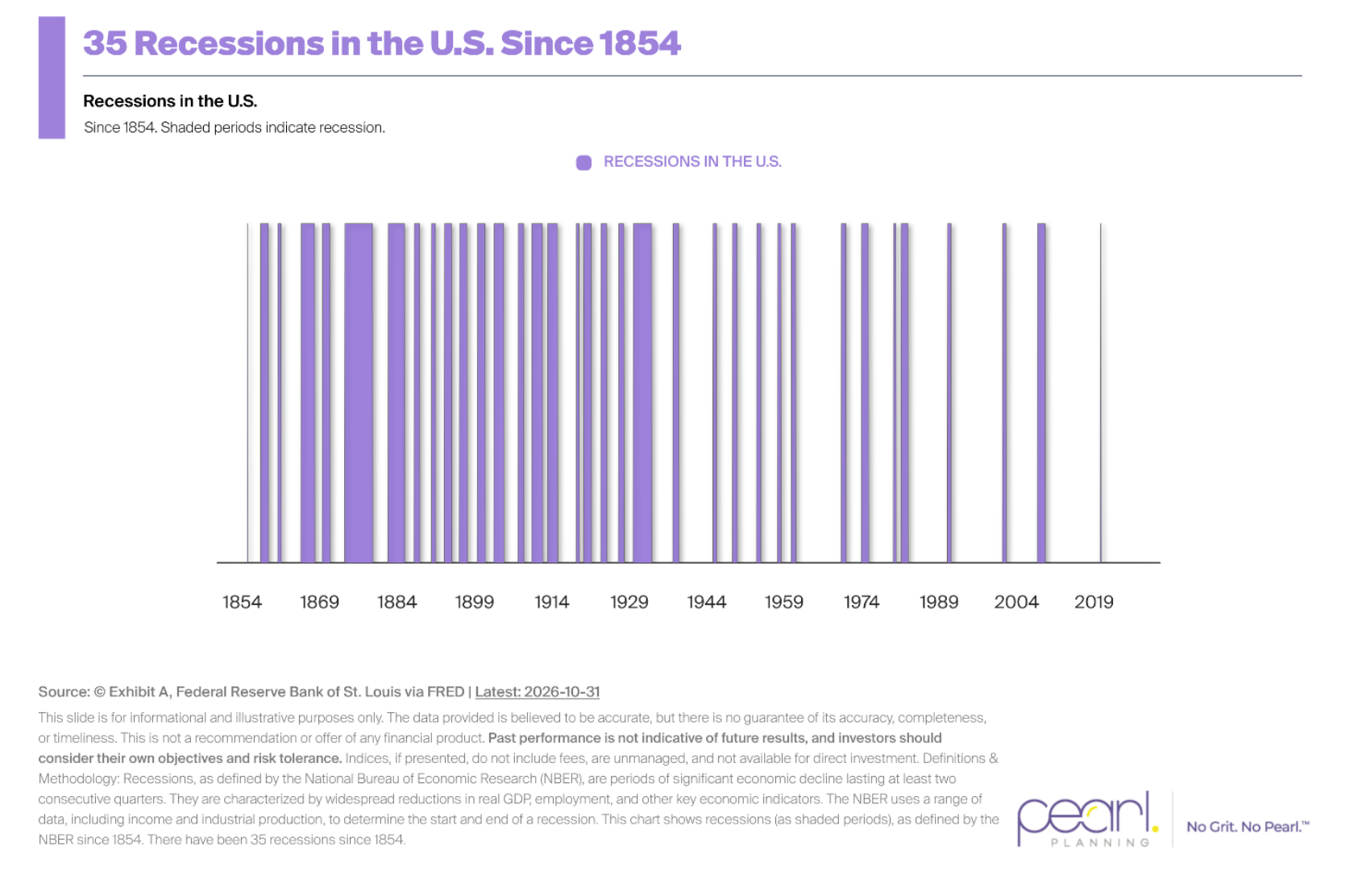
A stock market correction is not the same as an economic recession. Recessions are much less frequent than corrections, especially recently. We have had three recessions since 2000 and 19 corrections [Source: YCharts]. Recessions, which are defined by a significant decline in economic activity as measured by growth, unemployment, and government research are on their own trajectory. Third quarter US GDP growth was reported at 3.4% according to the US government.
Section 2: What Should Investors Do in a Correction?
Question 6: Should I sell my investments during a market correction and wait until things settle down?
One of the difficulties of stepping to the sidelines during a stock market correction is that you don’t know when the recovery will begin. Fortunately or unfortunately, depending on your action and perspective, the best days in the market are often clustered with the worst days in the market. The next two charts show the clustering of the best and worst days and the impacts of stepping aside during a drawdown to get back in when market reaches all- time highs.
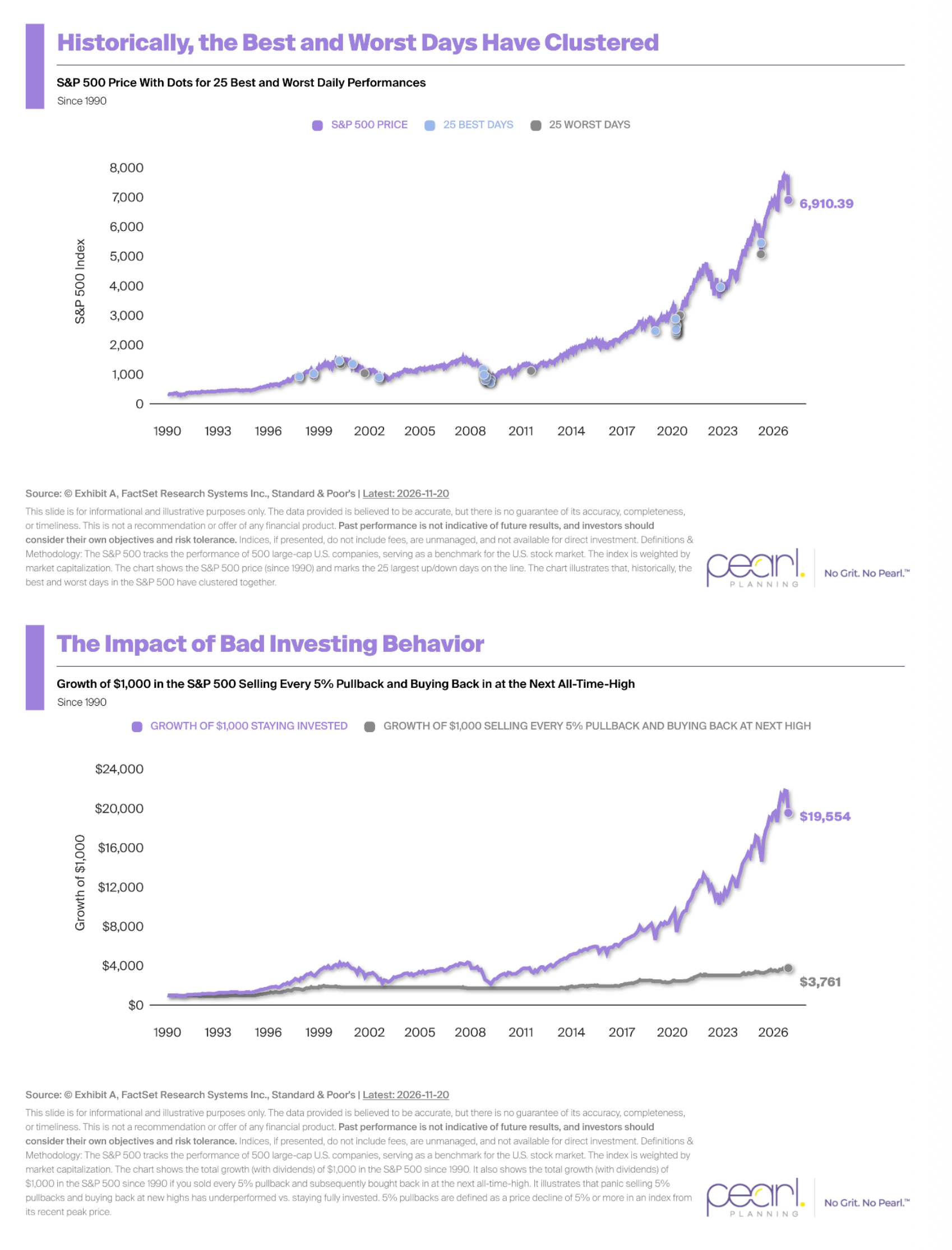
There is a market gap in the long-term returns of those who step away from investing during pullbacks. It can seem obvious to know when to get out. But getting back in can be very difficult and knowing how long a downturn will last can be filled with both head fakes and missed entry points.
Question 7: Should I change my market allocation if the market falls?
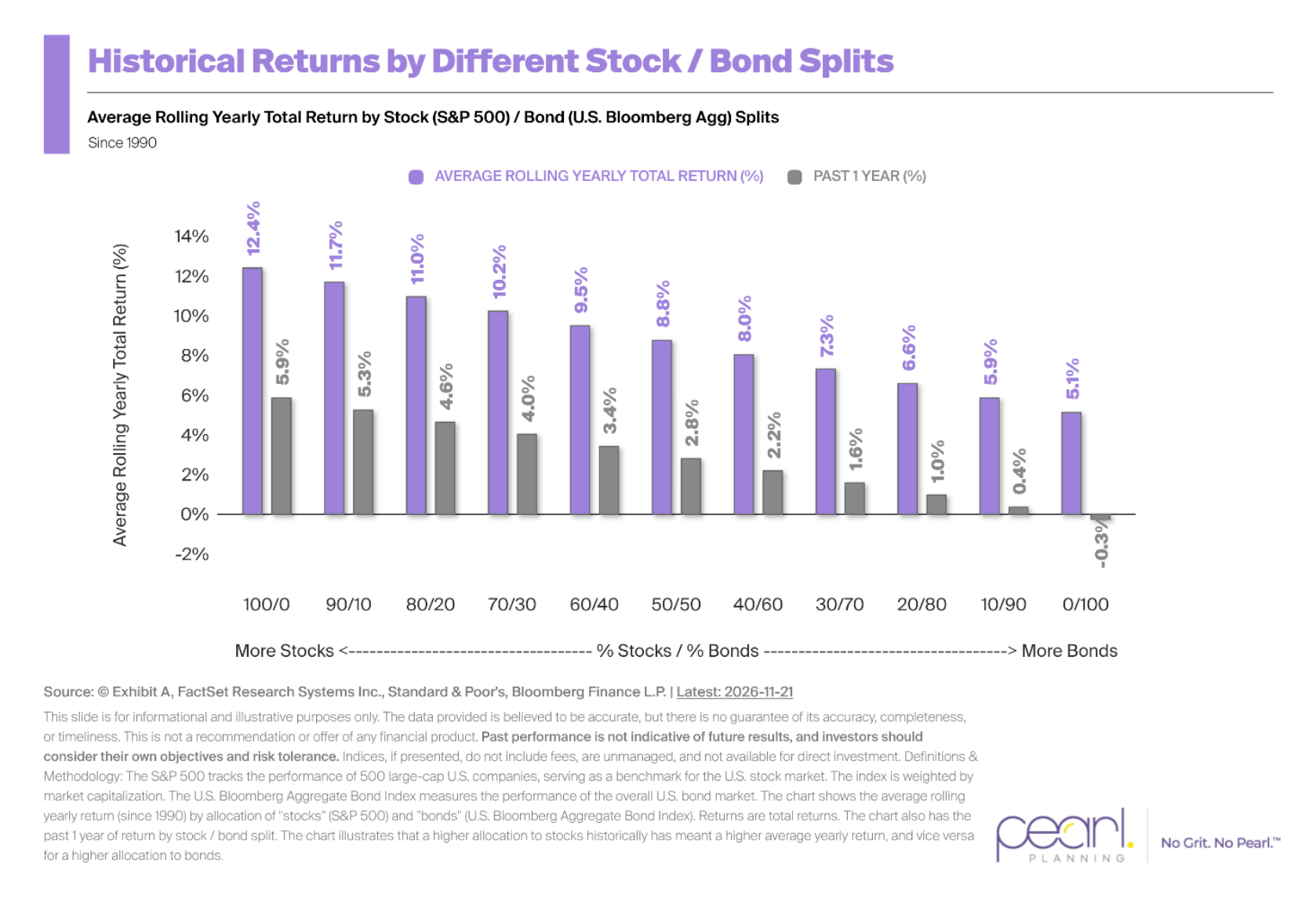
If you have chosen an investment mix based on your long-term investing objectives as well as your personality and approach to risk, it is unlikely that you need to change your investment allocation (also known as your mix between stocks and bonds). Diversification can make a big difference in terms of investor’s returns. While the S&P 500 entered into correction territory on November 2026, value stocks as measured by the Russell 1000 Value Index ETF (IWD) have only pulled back -6.74 and in November of 2026, bonds as measured by the US Bloomberg Aggregate ETF (AGG) is down only -0.49% [Source: YCharts]. If you have large, concentrated stock positions, have chosen your investment mix due to recent performance and not based on a risk/return perspective, or lack diversification in your portfolio, it may be time to review or adjust your investment allocation. A conversation or second opinion with a financial planner like Pearl Planning may assist with review of your portfolio’s strengths and weaknesses.
Question 8: Are there opportunities to take advantage of market corrections?
There can be several opportunities during market corrections or downturns.
Rebalancing. Rebalancing is selling back to the target mix of investments. Rather than radically shifting your investment mix, rebalancing to your pre-determined target allocation can assist with buying low and selling high. Over time, moving from asset classes that have performed better to those that are down more can help to keep your portfolio aligned as intended and prepare for recovery. Bonus points for those with a rebalancing system that helped to keep the portfolio aligned before the correction. This is a core part of the investing process at Pearl Planning.
Investing or Dollar Cost Averaging. If you have cash available to invest, putting money to work as stocks go down may provide good entry points. Many working Americans do this with each paycheck into their 401ks, or company retirement plans already.
Use Cash Reserves. Financial planners work with clients to set up emergency reserves. If you had intended to rely on your portfolio, this may be a time where you would rather use cash on hand for immediate needs.
Tax Loss Harvesting. If you have taxable investments, you may have positions that have unrealized losses. If sold and moved to a similar but different investment position or used with a rebalance, you may be able to use this now-realized loss to offset other realized gains in the year or to offset future realized gains, hence potentially lowering or deferring a tax bill.
Roth Conversions. Converting stock from traditional IRA or 401k assets to Roth assets can be desirable during a pullback if reinvested because it can result in a lower tax bill at the time of conversion and allow for a larger percentage of the retirement account to be converted. Whether a conversion makes sense depends on a variety of personal and financial factors, and are recommended to be considered with the assistance of a CPA or tax professional.
Review retirement account distributions. If you’re planning to reinvest retirement distributions once required to be withdrawn, you may be able to take a proportionally higher portion of your retirement account to be reinvested lowering future required distributions similar to conversions when stocks are lower strategy.
Question 9: I’m planning to retire soon or am retired now, how does a correction affect me differently?
People often see retirement as a finish line, but I often see it as either a continuation of your investment life or a starting line. Hopefully, your retirement will last decades. Prudent actions during a correction for retirees include:
Planning for withdrawals. We often recommend that you have a portion of your expected withdrawal needs in cash to be available when investments gyrate.
Pull from assets that have declined less. Bonds can often be a ballast during stock market downturns. A professional withdrawal strategy may aim to take your distributions from areas of your portfolio that have declined less, like bonds.
Revisit your retirement plan. Financial planners know that investment returns don’t deliver without volatility. Look at and refresh your financial plan to ensure that you stay on track and make adjustments, if necessary.
Question 10: What should my financial advisor do during a correction?
One of the top priorities at Pearl Planning is to focus on communication and conversation as a top priority during market corrections. Reminding clients of how volatility fits into the overall financial plan can be helpful. A financial planner or advisor will often review rebalancing opportunities, tax planning moves, and other prompt actions. While we do not recommend wholesale departure from the long-term investment plan, market disruptions can also uncover investment opportunities or changes to investment recommendations. This is an important part of our role during a time like now. Through it all, the investor, who is the central focus of the financial professional, is unique and advice should be personal. Knowing you, your life and your needs, is a critical function for the financial planner. In reality, the most important actions for an advisor often occur long before a pullback. At Pearl Planning, we believe that a disciplined proactive investment process and a financial plan tailored to your life and goals are built and refreshed over time rather than pulled together when things get difficult.
Conclusion
You can’t predict, but you can prepare!
Corrections are inevitable, but investment errors don’t have to be. Managing your decisions as an investor, sticking to a disciplined investment process, and maintaining a long-term investment perspective can go a long way to address your needs right now and during future downturns. You’ll never hear us at Pearl Planning predicting what’s next for markets. We are students of history, though, and use those lessons to inform the strategy we use with our clients. Our goal is not to eliminate uncertainty, but instead to help prepare you and your money to deal with it.
Advisory services offered through Pearl Planning, an Investment Adviser registered with the U.S. Securities & Exchange Commission. Registration does not imply a certain level of skill or training. This blog is for educational purposes only. It is not personalized investment, legal, or tax advice, or a recommendation to buy or sell any security. Past performance is no guarantee of future results, and all investing involves risk, including the loss of principal. Charts and examples using historical or hypothetical data are for illustration only, do not reflect fees, taxes, or trading costs, and do not represent actual client results. Third-party information is believed to be reliable but has not been verified by Pearl Planning. Please consult your advisor or tax professional before acting. Pearl Planning's Form ADV Part 2A is available at pearlplanning.com or upon request.